blog-id



If you are considering sourcing bags and luggage from China, you have probably already discovered that there are many places that can produce bags and luggage, but there are not as many factories that can truly deliver goods to you on time, at the right quality, and at your target cost as the search box suggests. The problem is often not "failing to find a factory," but choosing the wrong production region, asking the wrong people, or cutting corners in the wrong part of the process.
This guide answers only a few specific questions: what each production region is good at, what pitfalls a sourcing agent can shield you from, where the key control points in the process are, and which traps can be avoided in advance.
What We Actually Do
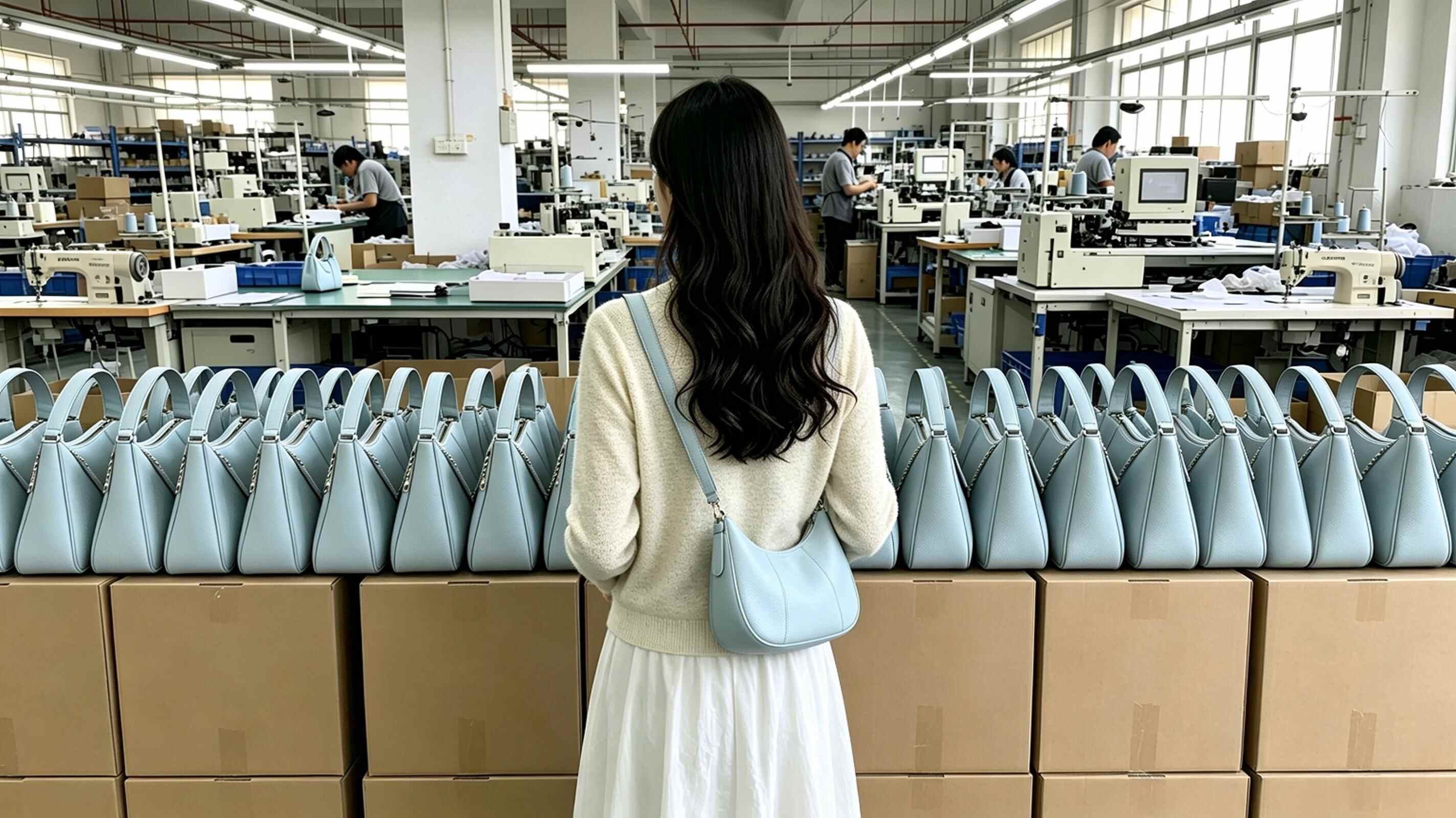
Our service really consists of three things: finding suppliers, coordinating quotations, and opening-box inspections. It sounds simple, but doing each one properly is not easy.
Finding suppliers. A large number of "factories" in the bag industry only have offices and sample rooms, and outsource production to nearby small workshops. We walk into the workshops in person to confirm that sewing lines, cutting machines, and injection molding machines actually exist and are running, helping you screen out "factories" disguised as trading companies.
Coordinating quotations. We inquire with factories on your behalf, negotiate MOQ and payment terms, and organize quotations from different factories into a comparable format. We do not earn a margin on the product; we charge only a transparent service fee, and our recommendations are not influenced by commissions from any single factory.
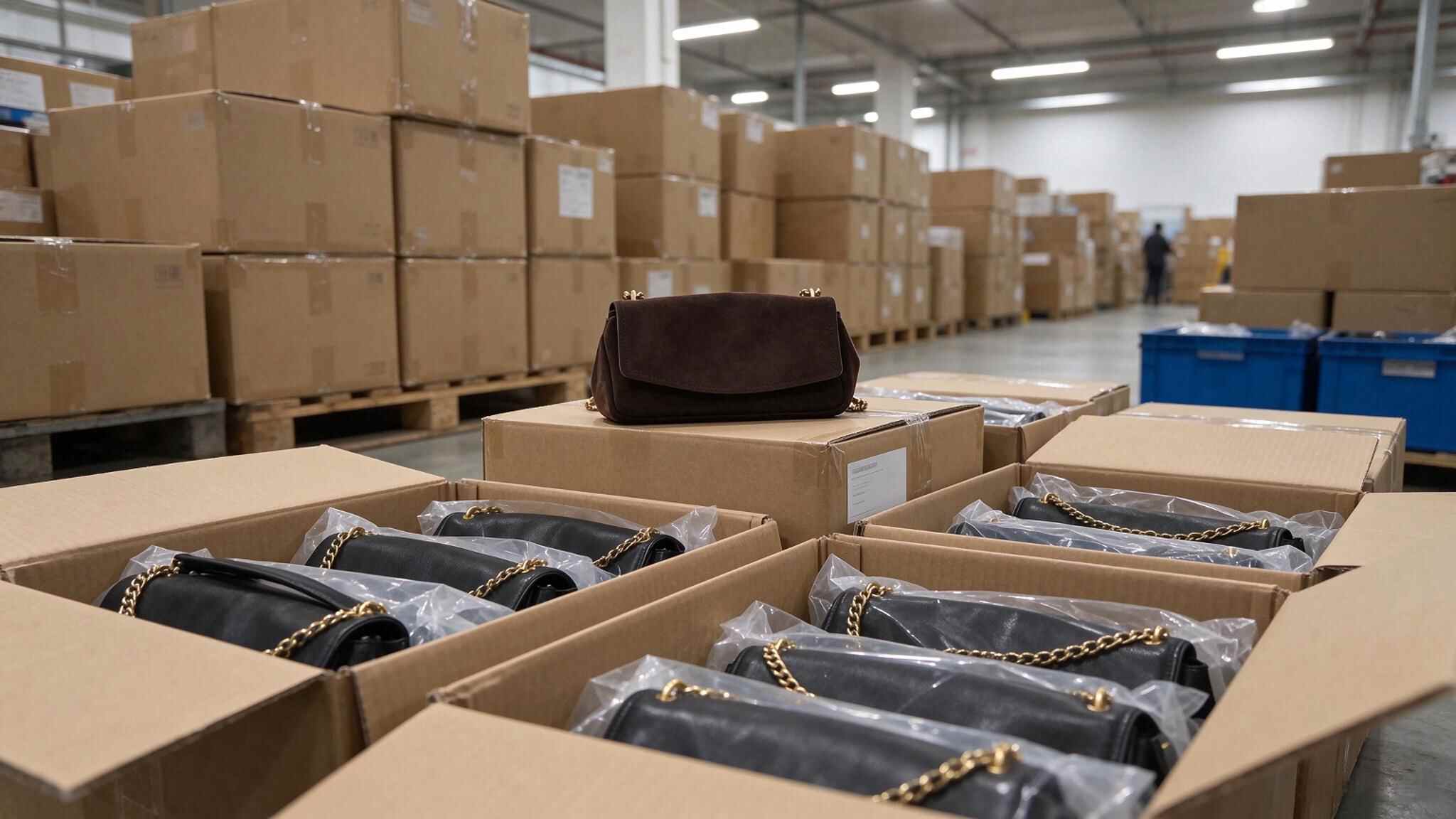
Opening-box inspections. After the goods arrive, we open boxes and conduct sampling inspections: stitch density, hardware function, color difference, cleanliness, packaging, and labels. If problems are found, we photograph and record them, and assist you in negotiating with the factory for rework or compensation. We cannot station staff at the factory to watch the production line, but we can see the actual goods on your behalf before shipment.
Integration and reducing your burden. When an order involves multiple categories, we help you coordinate with multiple factories and consolidate shipments, so you only deal with one window. That is all—no exaggeration.
Major Bag Production Regions in China
China's bag industry has grown along several clear industrial belts. Understanding this map is the first step to avoiding "going to the wrong place and asking the wrong people."
| Region | Core categories | Characteristics and suitable scenarios | Notes |
|---|---|---|---|
| Guangzhou Shiling | Fashion handbags, PU/genuine leather bags, some hard cases | "China's Capital of Leather Goods," 13,000 enterprises, annual output exceeding 700 million pieces, exporting to 142 countries and regions; one-stop access to raw and auxiliary materials. | Factory scale varies greatly; need to confirm in-house capacity and the proportion of outsourcing. |
| Dongguan, Guangdong | High-end handbags, genuine leather bags, OEM styles for luxury brands | Hardware texture, stitch density, and edge painting craftsmanship are far superior to ordinary production regions. Suitable for high-priced genuine leather handbags with strict detail requirements. | High quotations; MOQ is usually high. |
| Guangzhou Sanyuanli | All-category spot goods, wholesale market styles | Wholesale market window; suitable for small batches, multiple styles, and buying spot goods. | The supply capability behind the stalls needs to be verified; not suitable for in-depth customization. |
| Pinghu, Zhejiang | Travel trolley cases, hard-shell cases, carry-on cases, cosmetic cases | Produces about one-third of the country's travel trolley cases, with more than 400 enterprises; over 90% of accessories are locally sourced; long-term OEM production for international brands. | Categories are concentrated in hard cases; limited soft bag options. |
| Ruian, Zhejiang | ABS/PP hard cases, EVA fabric cases | A hard-case production region that overlaps with Pinghu's categories; mature supporting supply chain; can serve as an alternative or price comparison source outside Pinghu. | Overlaps with Pinghu's categories; compare scale and quotations. |
| Baigou, Hebei | Cloth bags, backpacks, low-to-mid-end trolley cases | More than 7,000 enterprises, annual output of nearly 1 billion pieces, about 30% domestic market share; extreme cost control. Suitable for price-sensitive, high-volume orders with basic styles. | Quality control fluctuates considerably; greater reliance on inspection. |
| Quanzhou, Fujian | Sports backpacks, casual soft bags, school bags, functional backpacks | More than 1,000 bag enterprises; sports and casual soft bag output accounts for about 36% of the country; deep experience in functional fabrics and load-bearing structures. | Hard cases and high-end genuine leather handbags are not its strengths. |
Region selection advice: Do not try to buy all categories in one city. A trolley case made in Shiling may not be more expensive than one made in Pinghu, but its professionalism and accessory completeness rate are not as good as Pinghu's; a sports backpack made in Baigou may be cheaper, but its functional design and fabric matching are not as good as Quanzhou's. Choosing the right production region is more meaningful than bargaining in the wrong one.
What Bags We Can Source
The following categories cover our main sourcing needs in daily operations. For items not listed, you can ask us directly, and we will honestly tell you whether they are within our capabilities.
Soft bags: Fashion handbags (totes, shoulder bags, crossbody bags, evening bags; PU/genuine leather/recycled leather); functional backpacks (backpacks, laptop bags, hiking backpacks, student schoolbags, which may include RFID anti-theft, USB charging ports, and other functions); business casual (briefcases, waist bags, chest bags, duffel bags).
Hard cases and travel categories: Trolley cases (PC/ABS/aluminum-frame hard shells, nylon soft shells, carry-on cases, checked cases, cosmetic cases), travel bags (luggage bags, foldable travel bags, wheeled travel bags). Pinghu and Ruian are the core production regions.
Small leather goods and accessories: Wallets, card holders, key pouches, toiletry bags, digital accessory organizers. Usually sourced as accompanying categories; ordering them alone entails a higher MOQ, so it is recommended to combine them with main categories.
Material coverage: Genuine leather, PU/PVC, nylon/canvas, recycled PET (rPET), and composite functional fabrics. If there are certification requirements such as GRS or REACH, please specify them in the inquiry.
Our Bag Sourcing Experience
A few lessons from actual orders—no exaggeration, only what really happened.
Case 1: YKK on the Quotation, No-Name Zippers in Bulk Goods
A European client ordered 500 commuter backpacks. At the quotation stage, the factory explicitly stated "YKK zippers." The samples were smooth, and the client confirmed them. When the bulk goods arrived at the warehouse and were opened for sampling inspection, the zippers felt rough, and the pulls had no YKK stamp.
After photographing and negotiating with the factory, the factory admitted that procurement had been out of stock and had used substitutes of the same specification, "forgetting to notify."
In the end, the factory supplied replacement YKK zippers and bore the rework costs, and delivery was delayed by two weeks. Lesson: Hardware brands must be written into the comparison table at the quotation stage and checked item by item during opening-box inspection.
Case 2: Peak-Season First Order Pushed Behind Old Clients
A client placed an order for a batch of trolley cases in July, with a 35-day delivery period stipulated in the contract. By day 30, the factory had completed only half, and upon questioning said that the production line was fully booked in peak season and repeat orders from old clients took priority.
We assisted in negotiations, and the factory added an extra shift to rush the work, but delivery was still delayed by 10 days. Since then, in peak-season order quotation comparison tables, we add one more question: "For this delivery date, has the production line slot been locked in?" Asking clearly cannot guarantee there will be no problems, but at least you will not find out only on day 30.
Case 3: Labels Sewn in the Wrong Position, Entire Batch Reworked
A US client ordered a batch of canvas tote bags. When the pre-production sample was confirmed, the label content was correct, but the sewing position was not confirmed. When the bulk goods arrived at the warehouse and were opened for sampling inspection, it was found that the care labels had been sewn at the bottom inside the bag, while the US market requires permanent labels to be in a position visible to consumers. The factory said "as long as the content is correct, it's fine," but both retail and customs could have problems because of this.
In the end, the factory unpacked and reworked the goods, moving the labels to the inner side seam. The cost of rework and delay far exceeded the cost of the labels themselves. Since then, we have added one item to the pre-production sample confirmation checklist: labels are not only about content; the sewing position and method must also be confirmed (sewn or adhesive, which side they are sewn on, and whether they will be obscured by the lining).
How We Help You Source Bags from China
Step 1: Requirement matching. You provide the category, target price, quantity, target market, and compliance requirements (such as Prop 65 and REACH). We provide production region recommendations, a shortlist of 3–5 initially screened factories, and a preliminary cost range. About 3–5 working days.
Step 2: Sampling and detail lock-in. We coordinate with the factory to produce samples and conduct an internal check before shipping (dimensions, fabric weight, color difference, hardware feel, stitch density); substandard samples will not waste your courier fees. Samples are accompanied by a detail comparison table highlighting the items that need key confirmation.
Step 3: Commercial negotiation and contract. We negotiate MOQ, price tiers, and payment methods on your behalf (usually 30% deposit / 70% against copy of bill of lading). The contract specifies delivery date, inspection standards (AQL 2.5), liability for breach, and ownership of molds and samples. If you pay for the mold, the contract must state ownership.
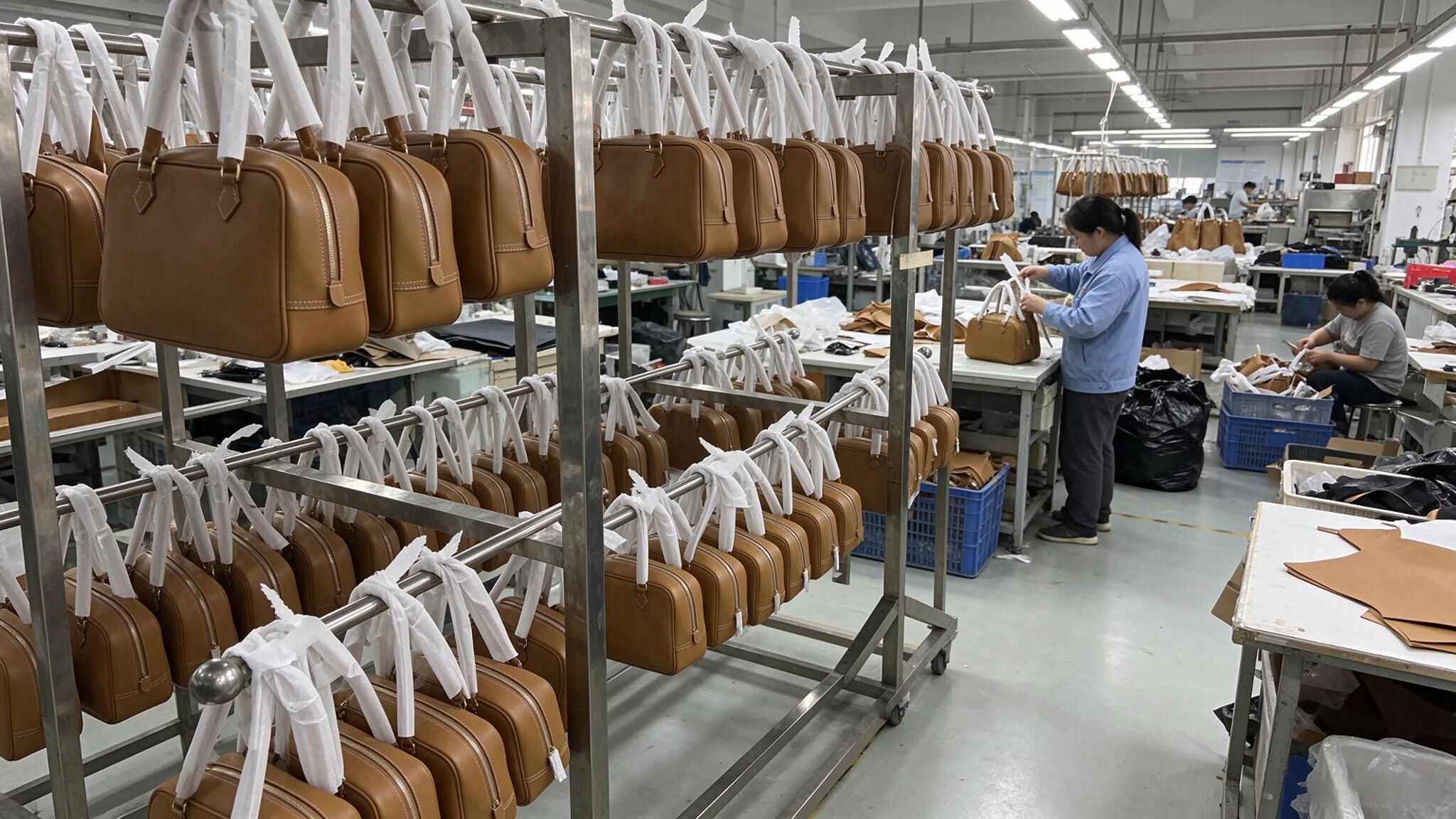
Step 4: Production follow-up and mid-production inspection. We provide progress photos or videos weekly. When the production line is 30%–50% complete, we conduct an in-process inspection: whether the fabric matches the confirmed sample, whether the hardware uses the agreed brands, whether stitch density meets the standard, and whether there is batch color difference. Problems found are corrected immediately, not left until the end.
Step 5: Pre-shipment final inspection. We conduct sampling inspection according to AQL 2.5 on stitch density, hardware function, color difference, cleanliness, packaging, and labels. We provide an inspection report (including defect classification and photos), and shipment is arranged only after you confirm release. If inspection fails, we assist you in negotiating rework or compensation and will not release the goods without authorization.
Step 6: Logistics and documents. Based on cargo volume and time requirements, we recommend full container load (FCL, usually more cost-effective above 8 CBM), less than container load (LCL, suitable for small-batch trial orders), or air freight (urgent replenishment/high-value styles). We assist in checking packing lists, invoices, and certificates of origin; for multi-region consolidated containers, we coordinate delivery from each factory and container loading by the freight forwarder.
Practical Tips for Buyers
Ask the factory four questions to expose a "pseudo-factory."
① "Is the shell injection-molded or thermoformed? What is the mold number?" Only people who have actually worked with molds can answer.
② "Please photograph the nameplate of the injection molding machine in the workshop." The model, year, and pressure tonnage can verify whether the capacity is real; be wary of those who send internet images or answer vaguely.
③ "Which processes do you outsource?" Honest disclosure of outsourcing is not scary; concealment is.
④ "If I pay for the mold myself, who owns the mold?" The answer must be "you"; if it is vague or refused, change to another factory.
Label compliance—do not let details eat your profit. United States: fiber content, country of origin, and care instructions must be on permanent labels (sewn, not adhesive). European Union: multilingual care labels; fiber percentages must be precise; "about 50% cotton" is non-compliant. When confirming pre-production samples, confirm the final version of the actual labels at the same time; do not just look at the design draft.
Always add volumetric weight when calculating landed cost. For air freight, the chargeable weight is the greater of actual weight and volumetric weight (length × width × height / 6000). Ask factories to provide flattened packaging solutions: detachable dividers, nested packing, and detachable trolley handles.
Payment security bottom line. Do not pay deposits to personal accounts; the name on the receiving account must exactly match the business license and the contracting party. For large orders, consider letters of credit or staged payment supervision. A factory that insists on 100% T/T before production and is unwilling to provide any guarantee is a warning sign that should be taken seriously.
Frequently Asked Questions
1. What does a China bag sourcing agent do?
A sourcing agent is your "eyes and hands" in China: screening production regions and factories and conducting on-site factory audits to confirm that the other party is a real factory rather than a trading company in disguise;
negotiating prices, MOQ, and payment terms on your behalf, using contracts to lock in delivery dates, inspection standards, and liability for breach;
following up on production and conducting mid-production and pre-shipment inspections, requiring immediate correction when problems are found; and coordinating multi-region container consolidation, logistics, and documents.
We do not earn a margin on the product; we charge only a transparent service fee, and our recommendations are not influenced by commissions from any single factory.
2. What types of bags can be sourced from Chinese factories?
Almost all categories: fashion handbags, functional backpacks, business casual bags, trolley cases (hard shell/soft shell/carry-on/cosmetic cases), travel bags, wallets and card holders, and other small leather goods.
Materials cover genuine leather, PU/PVC, nylon canvas, recycled PET, and composite functional fabrics. For items outside this scope, you can ask directly, and we will answer honestly.
3. In which Chinese city is it most cost-effective to buy bags and luggage?
It depends on the category, not on a single city. For hard-shell trolley cases, go to Pinghu, Zhejiang (about one-third of the country's output is produced there, with a local accessory matching rate of over 90%);
for fashion handbags and rapid style testing, go to Shiling, Guangzhou (one-stop raw and auxiliary materials, samples in 72 hours);
for sports backpacks and functional backpacks, go to Quanzhou, Fujian; for price-sensitive high-volume cloth bags, go to Baigou, Hebei;
for high-end genuine leather handbags, go to Dongguan. Choosing the right production region is more meaningful than bargaining in the wrong one.
4. How can I find a reliable bag manufacturer in China?
Four verification actions: photograph the nameplate of the injection molding machine or sewing line in the workshop to verify capacity; ask for the mold number—only people who have actually worked with molds can answer; ask about outsourced processes—honest disclosure is not scary, concealment is; confirm that the receiving account name exactly matches the business license and the contracting party.
On-site factory auditing through a sourcing agent is the most direct way, because a quotation sheet will not tell you whether it is a trading company in disguise.
5. What is the usual minimum order quantity for bag orders?
The MOQ for most custom factories is 300–1,000 pieces per style, depending on material and process complexity. Spot goods or generic styles in Baigou and Yiwu can accept lower trial order quantities.
We can negotiate to lower the MOQ for the first order, or combine multiple styles into one order to reach the minimum threshold. However, the lower the MOQ, the higher the unit cost; this is determined by the fixed costs of changing production lines and materials at the factory.
6. Can you help us with brand customization? Including logos and packaging.
Yes. Factories support debossing, silk-screen printing, metal plaques, embroidery, custom zipper pulls, custom lining woven labels, and supporting production of dust bags and branded cartons.
Brand customization usually increases MOQ and unit price, depending on process complexity and whether new molds are required. Where molds are involved, the contract will specify mold ownership.
7. How long does sample development usually take?
It depends on the category and complexity. Fast-fashion handbags in Shiling can be sampled in 72 hours; regular handbags and backpacks take about 7–15 days; hard-shell trolley cases involve molds and shell forming, usually 15–25 days, and longer for new molds.
Before samples are shipped, we conduct an internal check first; obviously substandard samples will not waste your international courier fees and time.
8. How should I check product quality before shipment?
Conduct sampling inspection according to AQL 2.5 on stitch density, hardware function (zipper smoothness, lock buckle spring), color difference, cleanliness, packaging, and labels. More critical is mid-production inspection: intervene when the production line is 30%–50% complete; rework costs are controllable when problems are found mid-production, while discovering them before packing means unpacking and redoing.
We provide inspection reports (including defect classification and photos), and shipment is arranged only after you confirm release; if inspection fails, we assist you in negotiating rework or compensation and will not release the goods without authorization.
9. Can a sourcing agent assist with shipping and customs clearance?
We can assist, but the boundaries must be clear. We recommend shipping solutions (FCL, LCL, air freight), assist in checking packing lists, invoices, and certificates of origin, and coordinate delivery and container loading for multi-region consolidation.
However, the primary responsibility for customs clearance at the destination port lies with the buyer or its designated customs broker; we provide document support and coordination and do not replace the statutory duties of the local customs broker. If you do not have a freight forwarder, we can recommend long-term service providers for you to evaluate.
One last note: every chapter of this guide can be discussed in more detail in the context of a specific order. If you are considering sourcing bags from China, welcome to bring your category and target market to talk with us, and we will tell you which production regions are most suitable and which pitfalls need to be avoided in advance.